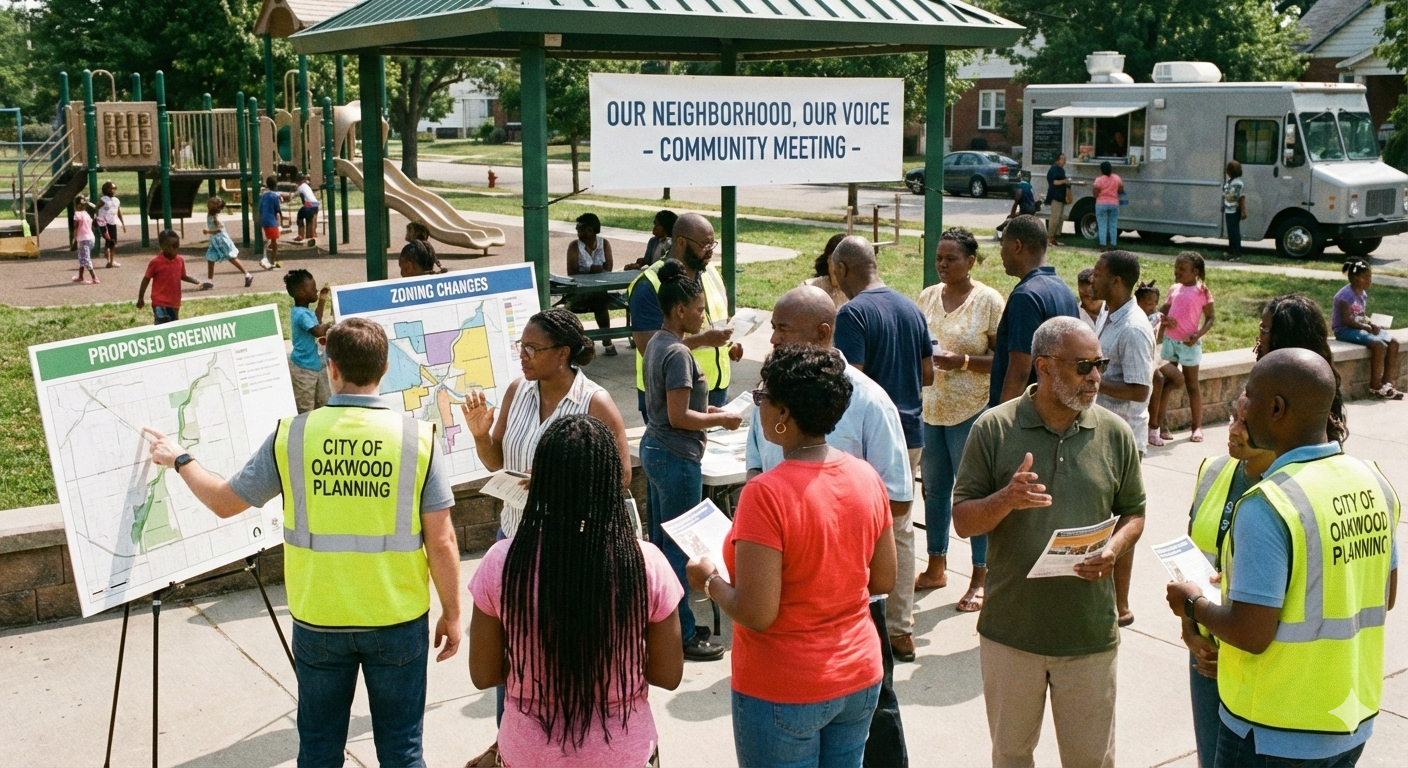
In the rush to draft, refine, and secure approval for a neighborhood plan, planners can easily overlook the fact that the planning process itself generates significant value. When done well, neighborhood planning becomes far more than the creation of a document—it becomes a catalyst for community connection, empowerment, and shared understanding. Several important benefits emerge during the process, often unnoticed.
Capacity Building
When planners engage residents through a participatory planning approach, community members begin forming committees, exploring potential strategies, and developing a deeper understanding of their neighborhood.
If a neighborhood organization already exists, the planning process typically strengthens its ability to collaborate with the city both during and after the plan’s development. If no organization is in place, the process often highlights the need for one—laying the groundwork for a group that can help implement the plan.
In either case, local government benefits when residents gain the skills, confidence, and structure needed to engage effectively.
Bringing People Together
Successful planning efforts bring together individuals who might otherwise never meet. Many neighbors simply need a reason to connect, and planning meetings often spark conversations, relationships, and a renewed sense of community.
Meaningful neighborhood improvement is difficult without interpersonal connection. The planning process provides structured opportunities for residents to interact, collaborate, and build trust.
Clarifying the Real Issues
At the outset, planners often hear anecdotal reports about neighborhood problems. City departments and service agencies may also hold preconceived notions about what is happening. These perspectives are useful starting points, but they require verification.
As the planning process unfolds, issues become more clearly defined—or, in some cases, disproven. New challenges may also emerge that better explain the neighborhood’s conditions.
For example, residents may initially cite “abandoned cars” as a major issue. Through fieldwork and analysis, planners may discover that only two such vehicles exist and that code enforcement is already addressing them. Without this clarification, the plan might have devoted time and resources to a non‑issue.
Highlighting Neighborhood Assets
From an external viewpoint, a neighborhood may appear to be defined primarily by its challenges. However, effective planning requires recognizing strengths as well. The “Asset‑Based Neighborhood Planning” approach emphasizes identifying and leveraging positive attributes—parks, institutions, engaged residents, cultural strengths, and more.
While some practitioners focus too heavily on assets and hesitate to acknowledge problems, a balanced approach is essential. A plan that fails to identify neighborhood assets does a disservice to the community and misses opportunities for building on existing strengths.
Creating Stronger Partnerships with Local Government and Nonprofits
City departments often view the community as a collection of neighborhoods, each with its own needs and service demands. They typically respond to individual complaints as they arise.
What distinguishes one neighborhood from another is the presence of an organized group willing to partner with city staff, agencies, and nonprofits. When residents have the capacity to engage constructively, staff are more responsive, and outcomes improve significantly.
A strong neighborhood organization becomes a valuable partner—one that can help shape solutions rather than simply request them.
Conclusion
These benefits represent some of the most meaningful outcomes of the neighborhood planning process, yet they are often overlooked. When planners focus solely on producing the final document, they may miss the transformative community-building that occurs along the way.
Neighborhood planning is not just about creating a plan—it is about strengthening the people, relationships, and understanding that make long‑term improvement possible.